
Flat Roof Ponding Water Repair in Costa Mesa, CA
Water sitting on a flat roof more than 48 hours after rain isn’t cosmetic — it’s actively shortening the roof’s lifespan. Here’s what causes it and what actually fixes it.
- Drainage diagnosis
- Slope correction
- Drain & scupper repair
- Residential & commercial
Why Ponding Water Matters More Than It Looks
A flat roof isn’t actually flat — it’s built with a slight slope, usually a fraction of an inch per foot, designed to move water toward drains or the roof’s edge. When part of that slope settles, when insulation underneath compresses unevenly, or when a drain gets blocked, water collects in a low spot instead of running off. If it’s still standing more than 48 hours after the rain stopped, that’s what roofers call ponding, and it’s a genuine problem, not just an eyesore.
Standing water adds significant weight to a section of roof that wasn’t necessarily built to hold it long-term, and it keeps that section of membrane constantly wet — which accelerates UV-related breakdown at the pond’s edges, promotes algae and debris buildup, and puts steady pressure on any seam or fastener sitting underneath the water. A membrane that would otherwise last two more decades can fail years early in a spot with chronic ponding.
What Actually Causes Ponding On Costa Mesa Roofs
The most common cause we find is a blocked or undersized roof drain — debris, granules, or organic buildup restricting flow enough that water backs up during Costa Mesa’s characteristic short, heavy winter bursts. The second most common is structural: decking that has sagged slightly over time, or insulation that has settled unevenly, both of which create a low spot that didn’t exist when the roof was new. On older built-up and hot-mop roofs, especially the mid-century stock common on the Eastside and around College Park, gradual structural settling is a frequent contributor.
How We Diagnose A Ponding Problem
- Check drains and scuppers first for blockage — often the fastest fix
- Map where water actually collects and for how long after rain
- Assess whether the cause is drainage-related or structural (deck or insulation)
- Inspect the membrane condition specifically within the ponding area
- Determine whether a targeted fix or a broader re-slope is the right call
Fixing It: From Simple To Structural
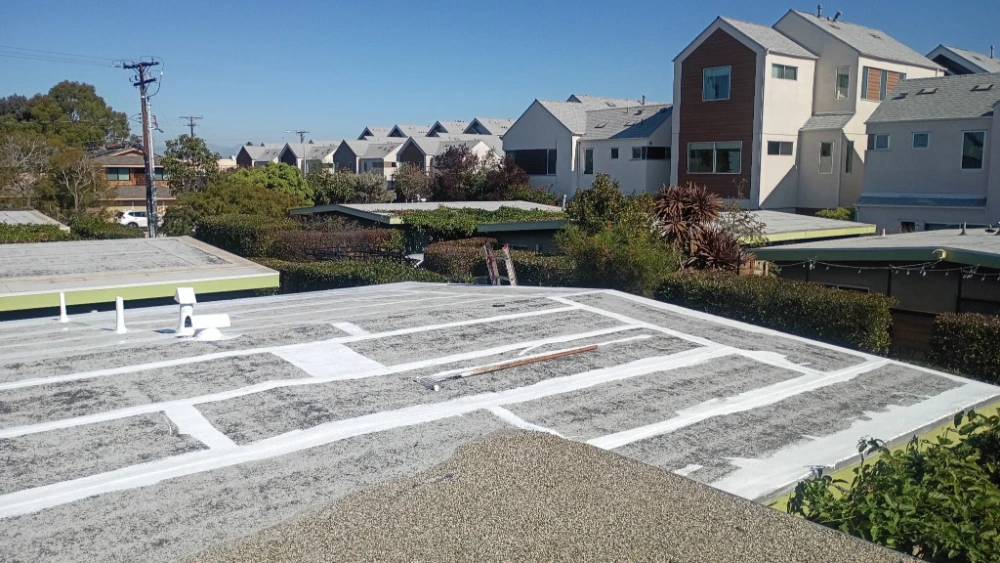
Drain & Scupper Clearing
Often resolves ponding entirely on its own if a blocked drain was the root cause — the simplest and least expensive fix.

Tapered Insulation Correction
Adding tapered insulation in the low spot rebuilds proper slope toward the drain without touching the rest of the roof.

Full Section Re-Slope
For larger or structural ponding areas, rebuilding the slope across a broader section is sometimes the only lasting fix.
Ponding Water In Costa Mesa’s Rain Pattern
Because Costa Mesa gets most of its annual rainfall packed into December through March, and often in short, intense bursts rather than steady rain, a marginal drainage problem that goes unnoticed during a light drizzle can turn into serious ponding during one of those bursts. That’s part of why ponding complaints tend to spike right after the season’s first heavy storm — the roof has been fine all summer with no rain to reveal the problem, and then it suddenly isn’t.
If you’ve noticed water sitting on a flat roof section for more than a day or two after any rain event this past season, it’s worth having it looked at before the next storm adds to it rather than after.
Water Still Sitting On Your Roof?
If it’s been more than 48 hours since the last rain, that’s ponding — and it’s worth a proper look.
Ponding Water And Your Insurance Or Warranty
Chronic ponding water is one of the more common reasons a roofing warranty claim gets denied, because most manufacturer and workmanship warranties explicitly exclude damage caused by standing water — the reasoning being that ponding is considered a maintenance and drainage issue rather than a material defect. That makes catching and correcting ponding early not just a leak-prevention issue but a warranty-protection one, especially on a roof that’s still within its original coverage period.
The same logic often applies to insurance. Sudden storm damage is typically covered; gradual damage from water that’s been sitting on a roof for months or years due to a drainage problem is usually treated as a maintenance issue rather than a covered peril. Documenting that you’ve had ponding addressed — with photos and a written report — is useful both for your own records and for any future claim or resale conversation.
A Quick Way To Check Your Own Roof
If you can safely access your roof after the next rain, a simple check is worth doing: look 48 hours after the rain stops for any areas still holding visible water, algae staining, or a darker, saturated-looking membrane color compared to the surrounding surface. Those are the telltale signs of a low spot that isn’t draining properly, and they’re worth having looked at before the next storm adds more water to the same spot.
A Note On DIY Ponding Fixes
It’s tempting to try to solve ponding with a roof coating or a bag of leveling compound from a hardware store. A reflective coating can genuinely help protect a membrane that’s already dealing with some ponding, but it doesn’t change the slope or fix a blocked drain — the water will still collect in the same spot. Leveling compounds applied without addressing the actual drainage issue tend to shift where the low point forms rather than eliminating it. If clearing a visibly blocked drain doesn’t resolve the standing water within a day or two of the next rain, the cause is very likely structural, not something a surface-level fix fully solves.
Flat Roof Ponding Water: The Quick Answer
If you’re dealing with flat roof ponding water right now, here’s the short version: water sitting more than 48 hours after rain is a genuine drainage or structural problem, not something to wait out. It’s one of the most common calls we get as a dedicated roof leak repair service, and it’s also one of the more fixable ones — often resolved by clearing a blocked drain rather than any major structural work.
Frequently Asked Questions
How long can water sit on a flat roof before it’s a problem?
Most roofing standards consider anything still standing 48 hours after rainfall stops to be a genuine ponding problem rather than normal, temporary drainage lag. Costa Mesa’s own repair specifications for roof drains treat ponding over about half an inch in a repaired area as unacceptable.
Can ponding water actually damage a flat roof?
Yes. It adds sustained weight, accelerates membrane breakdown at the edges of the pond, promotes algae and debris accumulation, and puts continuous pressure on any seam or fastener beneath the water. A roof with chronic ponding typically needs repairs or replacement years earlier than one without it.
Is ponding always a drainage problem?
Not always. A blocked or undersized drain is the most common cause, but structural issues — settled decking or unevenly compressed insulation creating a low spot — are also common, especially on older roofs, and those need a different fix than simply clearing a drain.
Can ponding water be fixed without replacing the whole roof?
Often, yes. Clearing a blocked drain or adding tapered insulation to correct a localized low spot can resolve ponding without touching the rest of the roof. Larger or more structural ponding areas sometimes need a broader re-slope.
Does roof coating fix ponding water?
A coating can add some protection to a membrane that’s dealing with ponding, but it doesn’t fix the underlying slope or drainage problem causing the water to collect there in the first place. It treats a symptom, not the cause.