Flat Roof Flashing & Parapet Wall Repair in Costa Mesa, CA
Flashing and parapet transitions account for the large majority of flat roof leaks we diagnose in Costa Mesa — not punctures in the open membrane. Here’s why, and how we fix it properly.
- Parapet walls
- Termination bars
- Coping caps
- Wall-to-roof transitions
Why Flashing Fails Before The Membrane Does
A flat roof’s membrane is designed to be one continuous, waterproof surface. The moment that surface has to meet something else — a wall, a vent pipe, an HVAC unit, the roof’s own edge — it needs a separate system to seal that junction, and that system is flashing. It’s a smaller, more exposed, more mechanically stressed component than the membrane field around it, which is exactly why it fails first.
On a Costa Mesa roof, that stress comes from a specific combination: intense summer UV exposure that dries and shrinks sealants, a daily marine-layer moisture cycle that works on metal fasteners and seams overnight, and Santa Ana wind events in fall and winter that physically pull at loose flashing edges and cap flashing until they lift. None of that is unique to any one property — it’s a pattern we see across residential, multifamily, and commercial roofs throughout the city.
Parapet Walls Are The Single Biggest Culprit
A parapet wall is the raised wall section that runs along the edge of many flat roofs, and it’s topped with a coping cap that’s supposed to shed water away from the wall on both sides. Where that cap meets the wall, and where the membrane meets the base of the wall, are both classic entry points. Water works its way behind an aging or improperly sealed cap, then travels down inside the wall itself before it ever shows up as a stain — often nowhere near the parapet.
Termination Bars Aren’t The Same As Flashing
A termination bar is a metal strip used to hold the membrane’s edge against a wall. It’s a mechanical fastening component, not a flashing system on its own — and treating it as if it were watertight by itself is one of the more common mistakes we see in prior repairs. Without a proper seal or counter-flashing above it, water gets in right behind the bar and follows the wall down, sometimes for a considerable distance before it becomes visible inside the building.
- Coping cap seams and end joints on parapet walls
- Termination bars without proper counter-flashing or sealant
- Wall-to-roof transitions where two different materials meet
- Flashing around vent pipes, HVAC curbs, and roof penetrations
- Edge metal and drip edge on the roof’s perimeter
Signs Your Flashing Has Failed

Wet Wall Behind A Parapet
A trowel or probe finds damp material just behind a cap or termination bar even when the surface looks dry.
Recurring Leak, Same Spot
A leak that’s been “fixed” before with caulk or sealant but keeps coming back is almost always a flashing problem, not a membrane one.

Visible Lifted or Loose Cap
A coping cap that rattles, has visibly lifted, or shows gapped seams after a windy stretch is a near-certain future leak point.
How We Actually Fix It
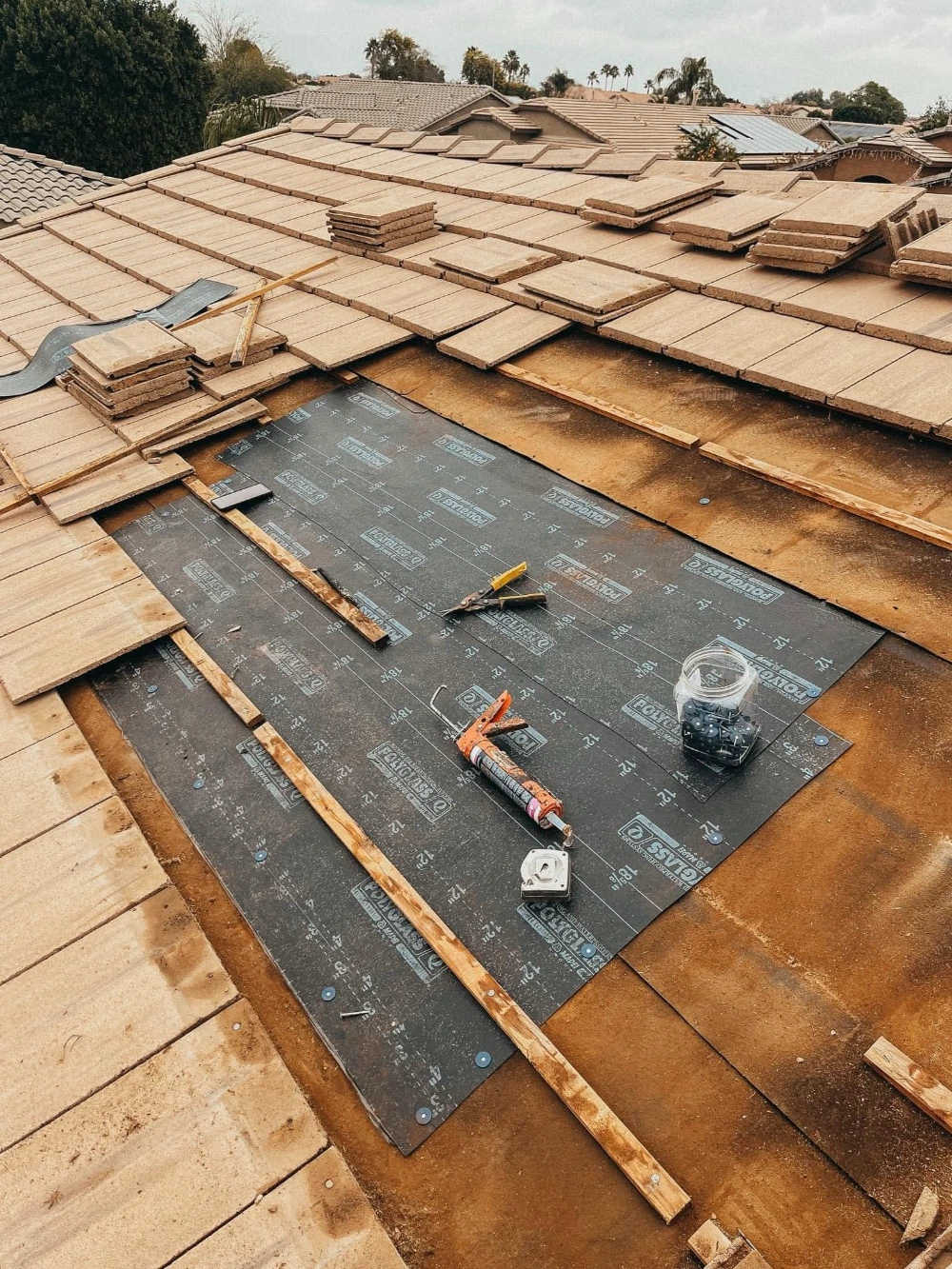
A proper flashing repair starts with getting the area completely dry — this isn’t optional, since new sealant or membrane material applied over damp material simply won’t bond and fails again within a season. Once it’s dry and clean, we apply a rubberized flashing cement or compatible sealant system matched to what’s already on the roof, reinforced with a fiberglass or fleece membrane strip embedded into the wet material for real structural strength, then a second coat over the top to fully encapsulate it. That combination — reinforcement plus a proper seal, not caulk alone — is what actually stops these leaks from coming back.
We also check for compatibility with the existing roofing system before we touch anything. Applying the wrong material over an incompatible surface — rubber over an old torch-down cap sheet, for instance — is a common cause of repairs that fail again within months, and it’s something we specifically look for when we’ve been called out to fix someone else’s prior patch.
Recurring Leak Near A Wall Or Edge?
That pattern points straight at flashing. Get a written, photo-documented inspection instead of another round of caulk.
Flashing Materials, Matched To Your Roof
Not every flashing repair uses the same materials, and using the wrong one is one of the most common reasons a “fixed” leak comes back within a year. A modified bitumen or built-up roof typically calls for a rubberized asphalt flashing cement, often reinforced with a fiberglass membrane strip, applied in a proper three-course method — a base coat, the reinforcing fabric embedded into it, then a top coat that fully encapsulates the fabric. TPO and PVC systems generally need a compatible single-ply flashing material that can be heat-welded or chemically bonded to match the field membrane, since asphalt-based products aren’t compatible with those synthetic membranes.
This is also where a lot of DIY and handyman repairs go wrong — grabbing whatever tube of roofing caulk is available at a hardware store without checking whether it’s actually compatible with the membrane already on the roof. Incompatible materials can fail to bond properly, or in some cases actively degrade the existing membrane at the point of contact, turning a small flashing issue into a larger repair.
Commercial Parapet Walls Need A Different Approach
On larger commercial buildings around South Coast Metro and the Bristol Street corridor, parapet walls often run considerable lengths and involve multiple coping cap sections with seams between them. Each of those seams is a potential entry point, which means a commercial flashing inspection typically involves checking the entire parapet run rather than just the section nearest a known leak — a leak showing up at one end of a building doesn’t rule out a second failure point further along the same wall.
Frequently Asked Questions
Why do flashing repairs sometimes fail within a year?
Most often because the area wasn’t fully dry before the repair, the wrong material was used for the existing roofing system, or a mechanical fastener like a termination bar was treated as watertight on its own without proper sealant and counter-flashing above it.
Is a parapet wall leak actually a roofing problem or a wall problem?
Both, in a sense — the water gets in at the roof-to-wall transition, but it often travels down inside the wall before it shows up, which is why the interior damage can look like a wall issue when the real fix is on the roof.
Can flashing be repaired without replacing the whole roof?
In most cases, yes. Flashing is a localized, discrete part of the roofing system, and a properly done flashing repair can resolve the leak without touching the rest of the membrane, as long as the surrounding material is still in reasonable condition.
How long does a flashing repair take?
A single parapet or termination bar repair is usually a same-day job once the area is confirmed dry. Multiple flashing points or larger commercial parapet runs take longer.
What’s the difference between flashing and a termination bar?
Flashing is a weatherproofing system designed to seal a transition point. A termination bar is a mechanical strip that holds membrane in place — it needs its own flashing or sealant above it to actually be watertight, which is a distinction a lot of botched prior repairs miss.