Modified Bitumen Roof Repair in Costa Mesa, CA
Modified bitumen is widely used across Costa Mesa homes and commercial buildings. Torch-down seams and flashing transitions are where it typically fails.
- Torch-down repair
- Cold-applied systems
- Residential & commercial
What Modified Bitumen Is
Modified bitumen is an asphalt-based roofing membrane reinforced with fiberglass or polyester and modified with rubber or plastic polymers for added flexibility and durability compared to older asphalt roofing systems. It’s typically installed in rolls, either torch-applied using heat to melt and bond the material, or cold-applied using adhesive, and it’s been a mainstay of both residential and commercial flat roofing in Costa Mesa for decades because of its proven durability and relatively straightforward repair process.
You’ll find modified bitumen on everything from mid-century homes throughout Eastside and College Park to larger commercial buildings, often layered over an older built-up roof as a renovation, or installed as the primary system on newer construction.
Common Failure Points
Seam failures at the overlap between rolls are the most frequent issue, particularly on older torch-down installations where the heat-fusion may not have fully bonded every inch of the seam originally. Flashing transitions at parapet walls and penetrations are the second major failure point, consistent with what we see across nearly every flat roofing system in Costa Mesa. Blistering — small bubbles where trapped moisture or air has pushed the membrane surface up — is also common on modified bitumen roofs that have seen years of UV exposure.
How We Repair Modified Bitumen Roofs
- Clean and dry the affected area completely — critical for torch-down or cold-applied adhesive to bond correctly
- For seam separations, re-heat and re-fuse torch-down seams, or reapply compatible cold adhesive for that system type
- Apply a three-course repair for punctures or damaged sections: flashing cement, embedded fiberglass reinforcement, and a top coat
- Address blistering by cutting out the affected area and patching with new, properly bonded material rather than sealing over trapped moisture
- Confirm flashing at all parapet and penetration points in the repair area is intact
Modified Bitumen On Older Costa Mesa Homes

Mid-Century Roof Layers
Many older homes have modified bitumen installed over an original built-up roof — worth knowing which layer is actually failing.

Torch-Down Safety
Any torch-applied repair requires proper fire safety precautions, especially near existing roofing material and vegetation.
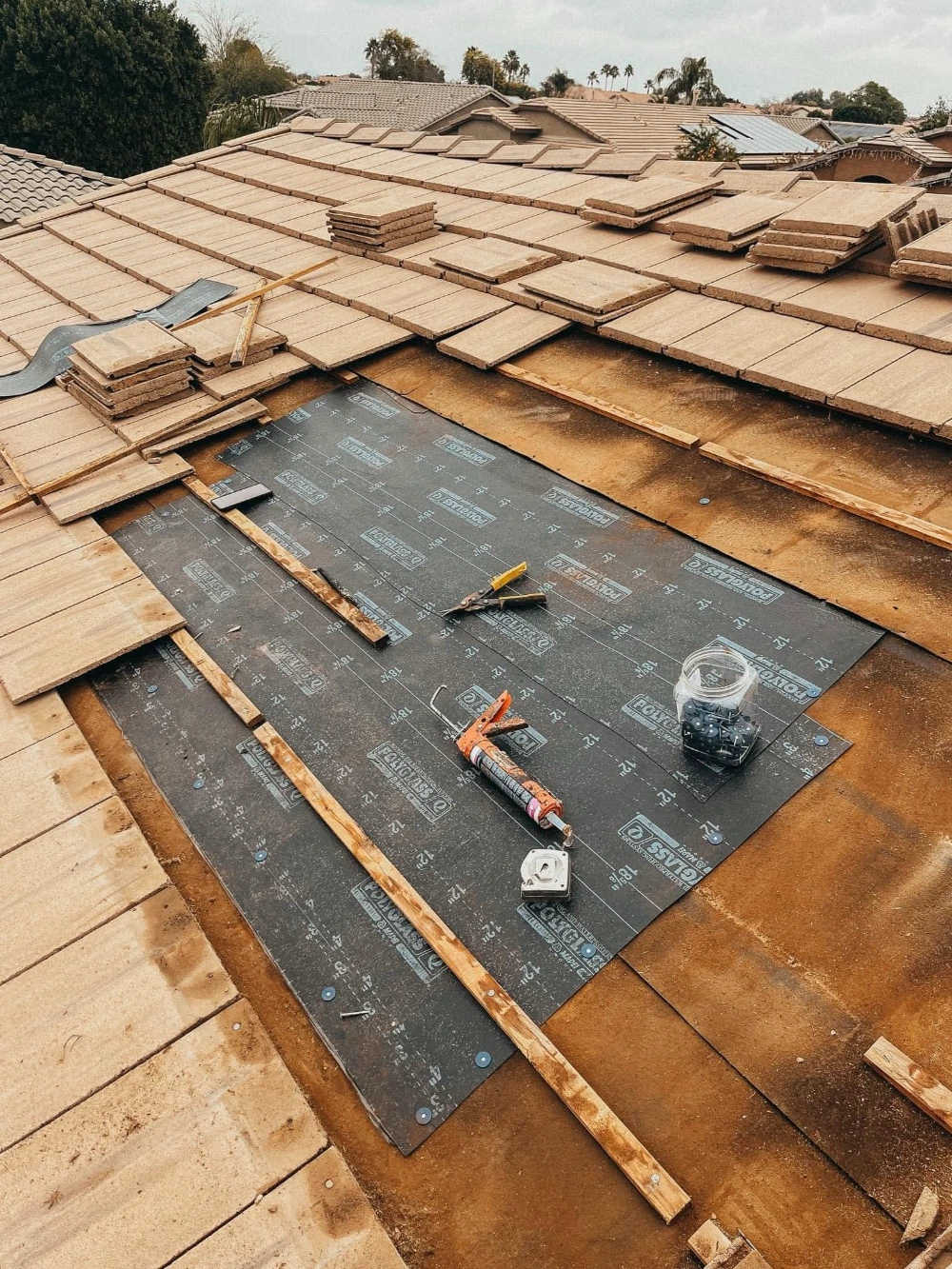
Cold-Applied Alternatives
For roofs near occupied structures or where open flame isn’t appropriate, cold-applied modified bitumen repair is a safe, effective alternative.
Recognizing Modified Bitumen On Your Own Roof
If you’re not sure whether your roof is modified bitumen, a few visual cues help: it’s typically a dark gray or black surface, sometimes with a mineral or granular cap sheet texture similar to asphalt shingles, laid in wide rolled sections with visible overlap seams running across the roof. Torch-down installations sometimes show slight scorching or discoloration along seam edges from the original heat-fusion process. If you’re still not certain, that’s fine — we identify the exact system during inspection before recommending any repair materials.
Combining Modified Bitumen With Other Systems
It’s not unusual to find a Costa Mesa roof where modified bitumen has been installed over an older built-up roof as a renovation layer, or where a newer single-ply system has been added over aging modified bitumen. Each layering scenario has its own compatibility considerations, and part of a proper inspection is confirming what’s actually underneath the visible surface before applying any new repair material on top.
Getting An Honest Timeline For Your Modified Bitumen Roof
Because modified bitumen has such a long track record in Costa Mesa, we’ve seen the full range of outcomes — roofs that failed early due to poor original installation, and roofs pushing 25-plus years still performing well because they were properly maintained. An inspection gives you a realistic, roof-specific answer rather than a generic age-based estimate, and we’ll tell you plainly where yours falls on that range.
If your modified bitumen roof is due for its next scheduled check, or you’ve noticed any new blistering, seam lifting, or a fresh interior stain, it costs nothing to have it looked at before the next storm tests it — and an early catch is almost always the smaller, less expensive repair.
Blistering Or A Lifted Seam On A Modified Bitumen Roof?
We repair it with the right method for your specific system — torch-applied or cold-applied.
Frequently Asked Questions
What’s the difference between torch-down and cold-applied modified bitumen?
Torch-down uses controlled heat to melt and fuse the membrane’s underside for bonding, while cold-applied systems use adhesive instead of heat. Both are legitimate modified bitumen installation methods, and the right repair approach depends on which type is already on your roof.
Is torch-down roofing safe to repair on an occupied building?
Yes, when done by an experienced contractor following proper fire safety precautions — clearing the work area of combustible materials, having fire suppression on hand, and monitoring the area after work is complete. Cold-applied repair is available as an alternative where open flame isn’t preferred.
What causes blistering on a modified bitumen roof?
Blistering typically results from trapped moisture or air between roofing layers expanding under heat, pushing the membrane surface up into a bubble. It’s generally a sign of an underlying application or moisture issue rather than something that resolves on its own.
How long does modified bitumen roofing last?
Commonly 15-25 years with proper maintenance, similar to other membrane systems, though multiple layers or a well-maintained roof can sometimes exceed that range.
Can modified bitumen be repaired without matching the exact original product?
In most cases a compatible modified bitumen repair product works fine, since the underlying chemistry across brands is broadly similar, though we always check for any unusual compatibility issues before applying new material over existing roofing.